
Niyaz's Blind Stick: One Robotics Course, a Million Views
In his first and only course at The Code Lab, 12-year-old Niyaz Hoshyar built a smart stick that vibrates to warn blind people of obstacles. Shown at MEDICO 2025 and live on Evin, Jin w Jyan, his video reached about a million people.
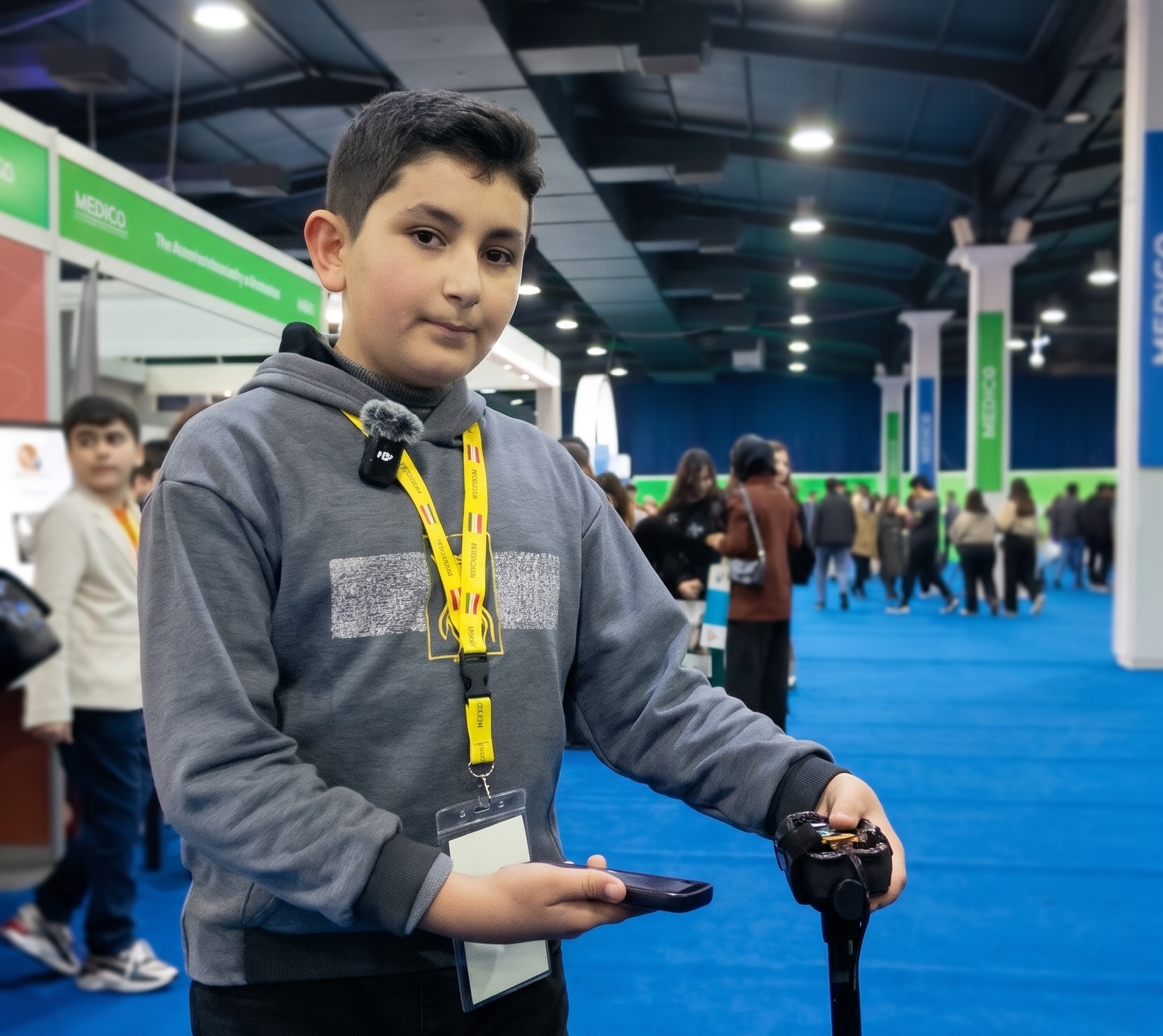
Student: Niyaz Hoshyar, age 12 · Course: Robotics with Scratch, The Code Lab · First shown: MEDICO 2025, Erbil
Niyaz Hoshyar built a smart walking stick that helps blind people move around safely. Sensors detect obstacles ahead, and the stick vibrates to warn the user before they reach them. "It's like the stick tells them when to stop or turn," Niyaz explains.
What makes this story remarkable is that the Blind Stick came from Niyaz's first and only course at The Code Lab. He took one robotics course, and this was the result. His project went on to be shown at MEDICO 2025, featured live on the TV show Evin, Jin w Jyan, and presented at festivals and in the media. A video of him presenting it went viral, reaching about a million people.
Why this project matters
About 43.9 million people worldwide were blind in 2020, and that number is expected to reach 61 million by 2050 (The Lancet Global Health, via ScienceDaily). At least 2.2 billion people live with some form of vision impairment (WHO).
For a blind person, simply walking down a street can be risky. A traditional white cane only finds what it touches, so obstacles at head or chest height, like signs, branches or open doors, are easy to miss. Smart canes with sensors exist, but many are expensive and hard to find in our region.
Niyaz's Blind Stick tackles exactly this problem:
- Earlier warning. Sensors detect obstacles before the user touches them.
- Simple feedback. A gentle vibration tells the user to stop or turn, with no screen or sound needed.
- Within reach. Student-built projects like this point toward smart canes that more families can afford.
It is a student prototype, not a certified medical aid. But it shows how a 12-year-old in Erbil can think about the people around him and build something to help them.
How it works
The Blind Stick combines a sensor, a small controller and a vibration motor. Niyaz programmed it using block-based coding, which he learned in the course.
- Sense. A sensor on the stick constantly checks for objects in front of the user.
- Decide. The controller runs Niyaz's program, which decides when an object is close enough to be a risk.
- Warn. The stick vibrates gently, telling the user to stop or change direction.
Niyaz worked hard to make sure the stick was safe and easy to use.
From the classroom to a million viewers
Niyaz's Blind Stick reached far more people than anyone expected.
- MEDICO 2025, Erbil. Niyaz presented the stick at MEDICO 2025, Erbil's health exhibition, alongside other student projects from The Code Lab.
- Live on TV. He was invited to demonstrate it live on the TV show Evin, Jin w Jyan.
- Media and festivals. Many other media outlets covered his project, and he went on to present it at several festivals.
- A viral video. A video of Niyaz showing his project went viral. It was seen by around one million people and drew thousands of comments.
A million views is not something a classroom project usually gets. It shows how much people care when young learners use technology to help others.
What one robotics course can do
Niyaz took just one course at The Code Lab. He had no previous experience with us, and the Blind Stick was his final project. That is the clearest proof of what the course delivers.
The course combines Scratch, a block-based programming language, with real robotics. Students drag and connect code blocks to control physical robots, instead of typing code. Along the way they learn:
- Robotics basics: how motors, sensors and actuators work together
- Programming logic: how to make a robot react to its surroundings and carry out tasks
- Teamwork: building robotic games and challenges together with classmates
- Design for people: turning a real-world problem into a working device
By the end of the course, students are not just using robots, they are designing them. For Niyaz, one course was enough to go from first lesson to a project seen by a million people.
Built at The Code Lab
The Code Lab teaches children and teenagers in Erbil to build real technology: robotics, programming, AI and more. Niyaz's Blind Stick shows that one well-designed course can take a student from their first lesson to an invention that a million people talk about.
Want your child to build something that matters? Get in touch with The Code Lab to learn about our robotics course.
Sources
- Global blindness and vision impairment estimates, 2020, ScienceDaily, reporting on The Lancet Global Health, 2020
- WHO launches first World report on vision, World Health Organization, 2019
More projects
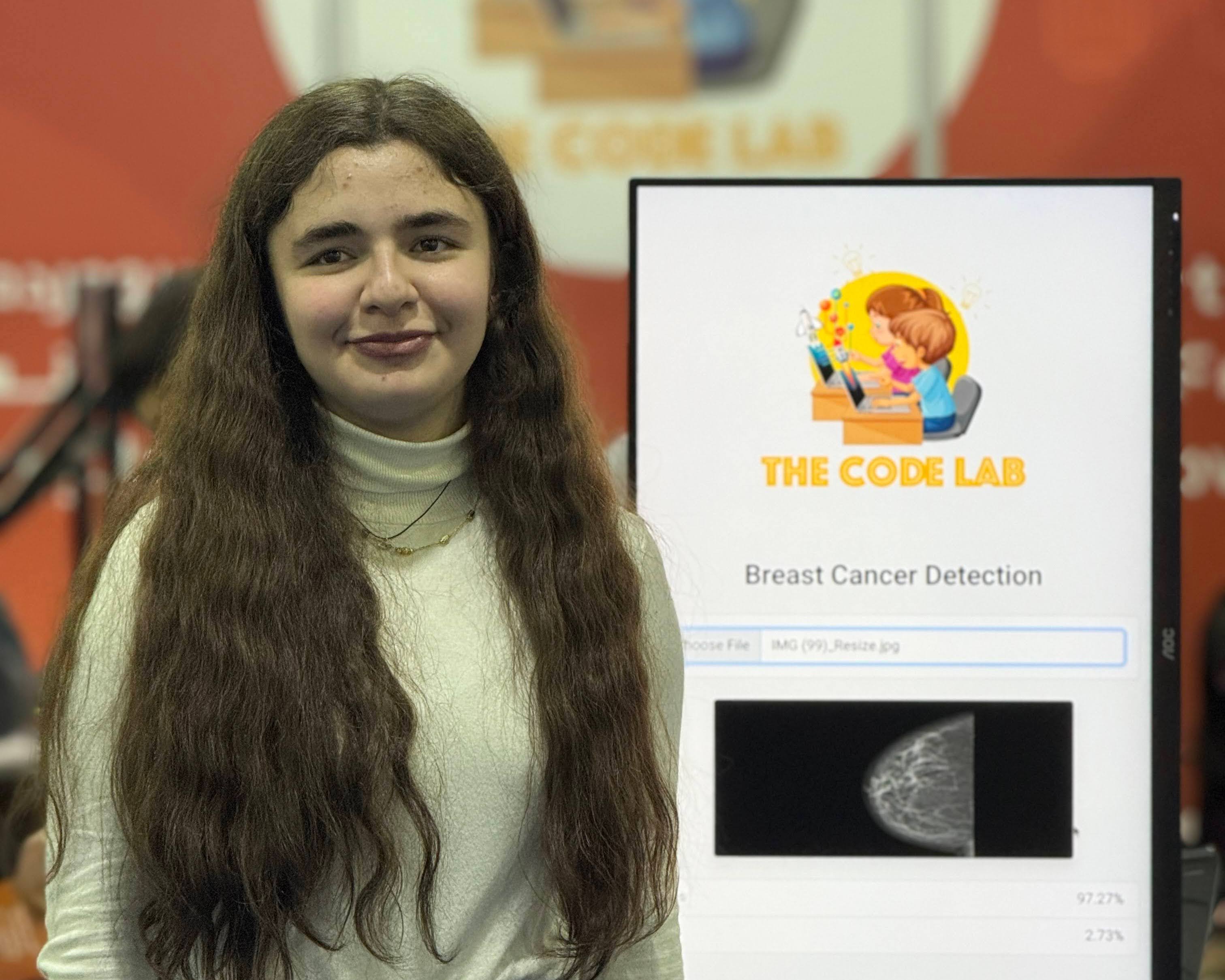
Rana’s Breast Cancer Detection Tool: AI for Early Screening
Rana Kovan, a 9th grader at The Code Lab, built a deep learning tool that analyzes breast scans for early signs of cancer. Her project debuted at MEDICO 2025 and took her live onto Rudaw TV’s October awareness campaign.
View Project →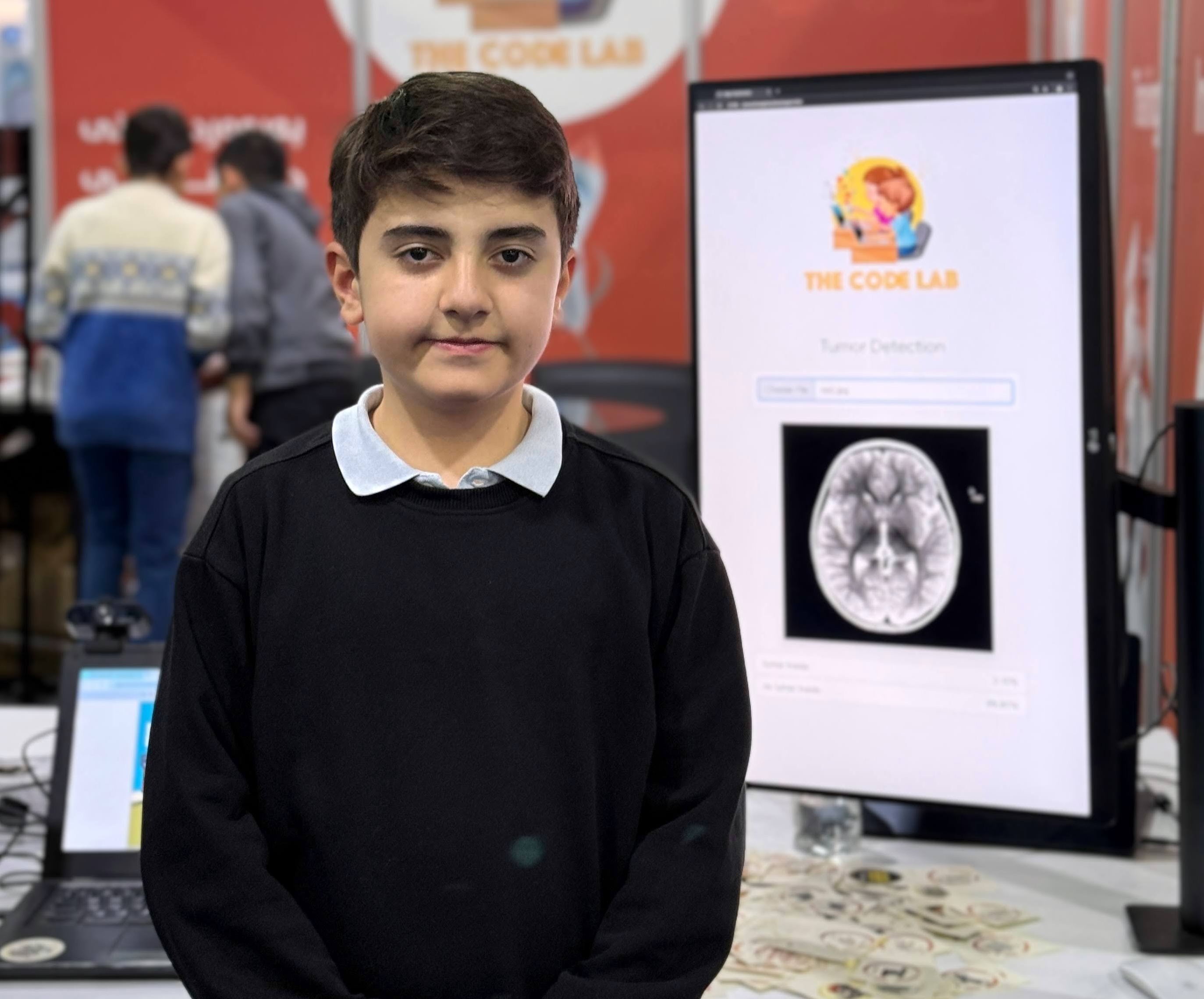
Miras's Brain Tumor Detection Tool: What Our AI Course Builds
At 14, Miras Abdulghaur built an AI tool that highlights possible brain tumors in medical scans. Revealed at MEDICO 2025 and featured live on Evin, Jin w Jyan, his project shows what students achieve in The Code Lab's AI course.
View Project →