
Miras's Brain Tumor Detection Tool: What Our AI Course Builds
At 14, Miras Abdulghaur built an AI tool that highlights possible brain tumors in medical scans. Revealed at MEDICO 2025 and featured live on Evin, Jin w Jyan, his project shows what students achieve in The Code Lab's AI course.
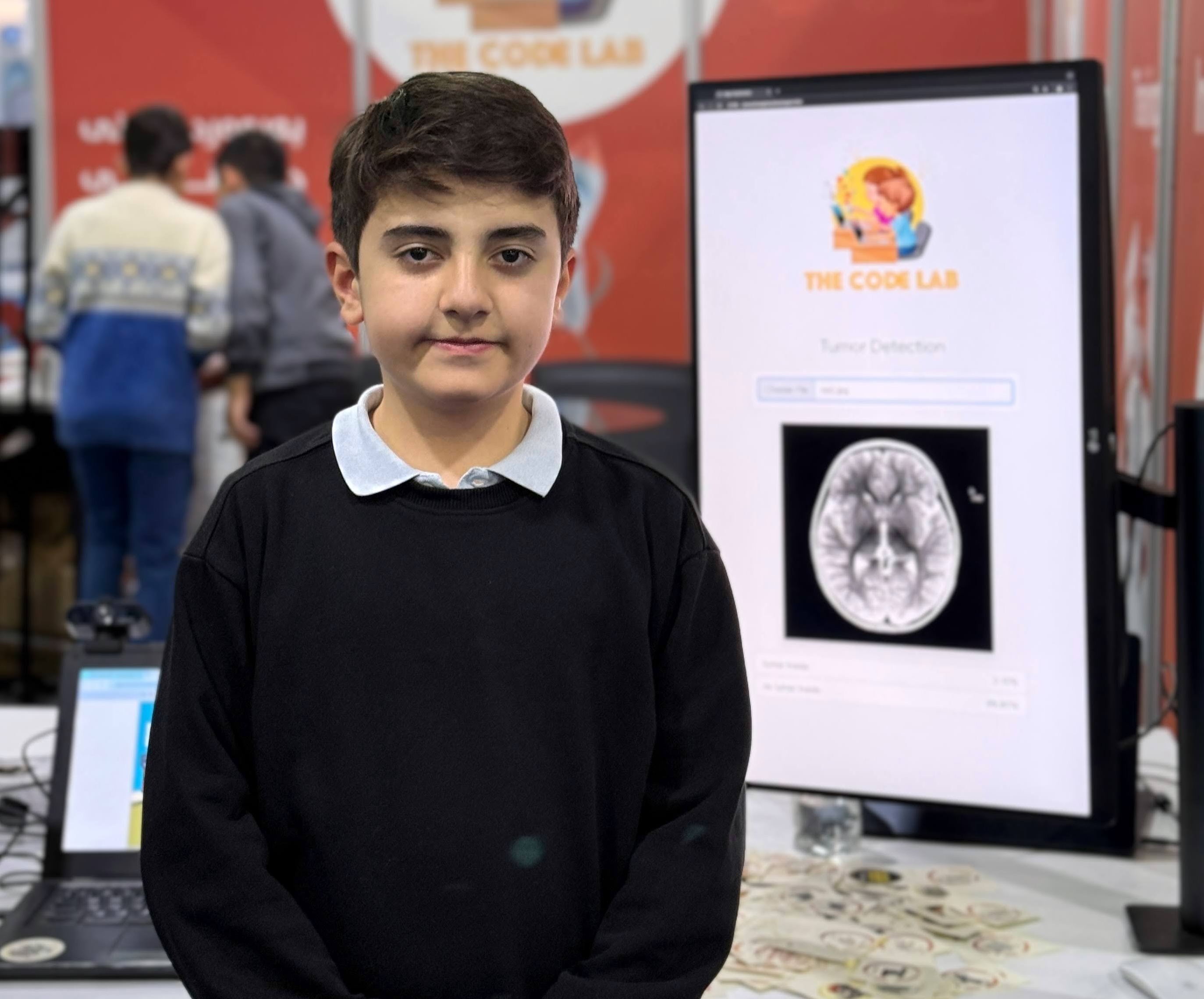
Student: Miras Abdulghaur, 8th grade, age 14 · Course: Artificial Intelligence, The Code Lab · First shown: MEDICO 2025, Erbil
Miras Abdulghaur built an AI tool that studies brain scan images and highlights areas that may be a tumor. He was 14, in 8th grade, and had built it in The Code Lab's AI course.
When he started, Miras thought coding was out of reach. "When I first joined, I thought it would be very difficult," he recalls.
"But once I started building real projects, I was amazed. That's when I knew this would really help me build skills for the future."
His Brain Tumor Detection Tool was a highlight of MEDICO 2025, seen by the Kurdistan Region's Prime Minister, featured live on TV in the show Evin, Jin w Jyan, and covered by several news outlets.
Why this project matters
Brain tumors are uncommon but very deadly. In 2024, there were about 324,000 new cases of brain and nervous system cancer worldwide and nearly 249,000 deaths, according to the WHO's cancer agency (IARC). Brain and nervous system tumors are also the most common solid tumor in children (Tropical Medicine and Health, 2025).
Finding a brain tumor depends on reading MRI and CT scans, which takes time and specialist skill. Each patient's scan holds many images, and every image has to be checked carefully. AI can help in three ways:
- Faster reading. An AI tool can flag suspicious areas right away, so doctors know where to look first.
- A second opinion. It acts as an extra set of eyes, which helps reduce the chance of missing a small tumor.
- Wider reach. Hospitals with few specialists can get support in sorting urgent scans from routine ones.
Miras's tool is a student project, not a medical device. But it is built on the same idea that research teams around the world are working on today, and he built it at 14.
How it works
The tool uses deep learning, a type of AI that learns by studying many labeled examples. Miras's model learned from brain scan images, some with tumors and some without, until it could recognize the patterns on its own.
- Upload a scan. The user gives the tool a brain scan image.
- The AI analyzes it. The model examines the image for patterns linked to tumors.
- See the result. The tool highlights the areas that may need a doctor's attention.
"The AI looks at the image and highlights areas that might be a problem," Miras explains.
"It helps doctors make faster and more accurate decisions."
From the classroom to live TV
Miras's project quickly went far beyond the classroom.
- MEDICO 2025, Erbil. The tool was revealed at MEDICO 2025, Erbil's health exhibition, next to other medical AI projects by Code Lab students. The booth was one of the most crowded at the event, and visitors stopped to see an 8th grader's AI analyze brain scans.
- Seen by the Prime Minister. Miras's tool was one of the highlights of the exhibition. At the opening ceremony, H.E. Masrour Barzani the Prime Minister of the Kurdistan Region saw his project at our booth. It was later seen by Dr. Saman Barzanji, KRG Minister of Health, and by Dr. Azad Najar, CEO of KII, who was very impressed by it.
- Live on TV. Miras was invited to appear live on the TV show Evin, Jin w Jyan, where he explained how his tool works and why AI matters for healthcare.
- News coverage. Many other news outlets also covered his project, sharing the story of a 14-year-old building AI for brain tumor detection.
For a student who once thought coding was too hard, explaining his own AI system on live television showed how far he had come.
What our AI course produces
Miras's tool is not a one-off. In the AI course at The Code Lab, students as young as 9 build working AI systems, and many go on to present them to the public.
The course introduces artificial intelligence through fun, interactive lessons. Students learn how machines learn from data, how to analyze it, and how AI is used in everyday life. They also discuss the ethical impact of AI on society. Then every student builds a real project.
Projects built in the AI course
|
Project |
Student(s) |
What it does |
|---|---|---|
|
Breast Cancer Detection Tool |
Rana Kovan, 15 |
Analyzes breast scans for signs of cancer |
|
Brain Tumor Detection Tool |
Miras Abdulghaur, 14 |
Highlights possible tumors in brain scans |
|
Posture Detection Tool |
Warvan Haval, 11 |
Checks a person's posture through a camera |
|
Healthy Food Detection Tool |
Aran Arez, 11 |
Gives instant feedback on eating habits |
|
Face Mask Detection Tool |
Rasan Jegr, 9 and Arzhan Kovan, 12 |
Detects whether a person is wearing a mask |
|
Flappy Bird, Nose-Controlled Edition |
Rasan Jegr, 9 and Arzhan Kovan, 12 |
A game played with face tracking instead of a keyboard |
What students take away
- Real AI skills. How models are trained on data, how they make predictions, and how to build a working tool, not just a demo on paper.
- Problem-solving. Students start from a real problem, often in health, and design a solution for it.
- Responsible thinking. They learn that AI should support people like doctors, not replace them.
- Confidence and communication. Students present at events like MEDICO and HITEX, speak to journalists, and in Rana's and Miras's case, appear on live TV.
- A clear direction. Many leave with a goal. Miras now wants to become a software engineer, and Rana a dermatologist who uses AI.
As Miras puts it: "It showed me what I'm capable of. It opened a door to a future I want to be part of."
Built at The Code Lab
The Code Lab teaches children and teenagers in Erbil to build real technology: AI, programming, robotics and more. Miras's Brain Tumor Detection Tool shows what happens when young learners get the right guidance. A student who thought coding was too hard ends up explaining his own AI system on live TV.
Want your child to be next? Get in touch with The Code Lab to learn about our AI course.
Sources
- Brain, central nervous system fact sheet, Global Cancer Observatory, IARC (WHO)
- Global, regional, and national childhood brain and central nervous system cancer burden, Tropical Medicine and Health, 2025
More projects
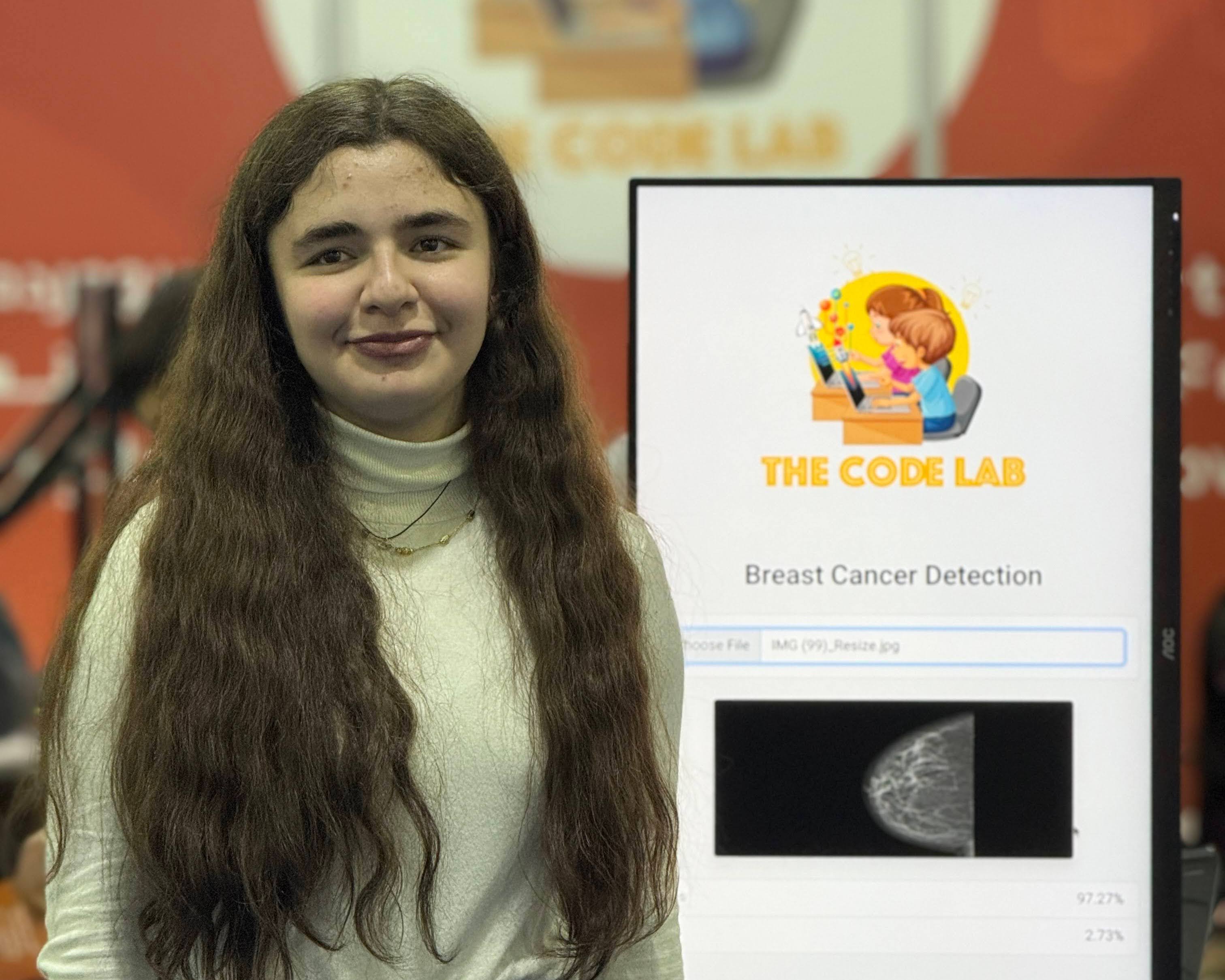
Rana’s Breast Cancer Detection Tool: AI for Early Screening
Rana Kovan, a 9th grader at The Code Lab, built a deep learning tool that analyzes breast scans for early signs of cancer. Her project debuted at MEDICO 2025 and took her live onto Rudaw TV’s October awareness campaign.
View Project →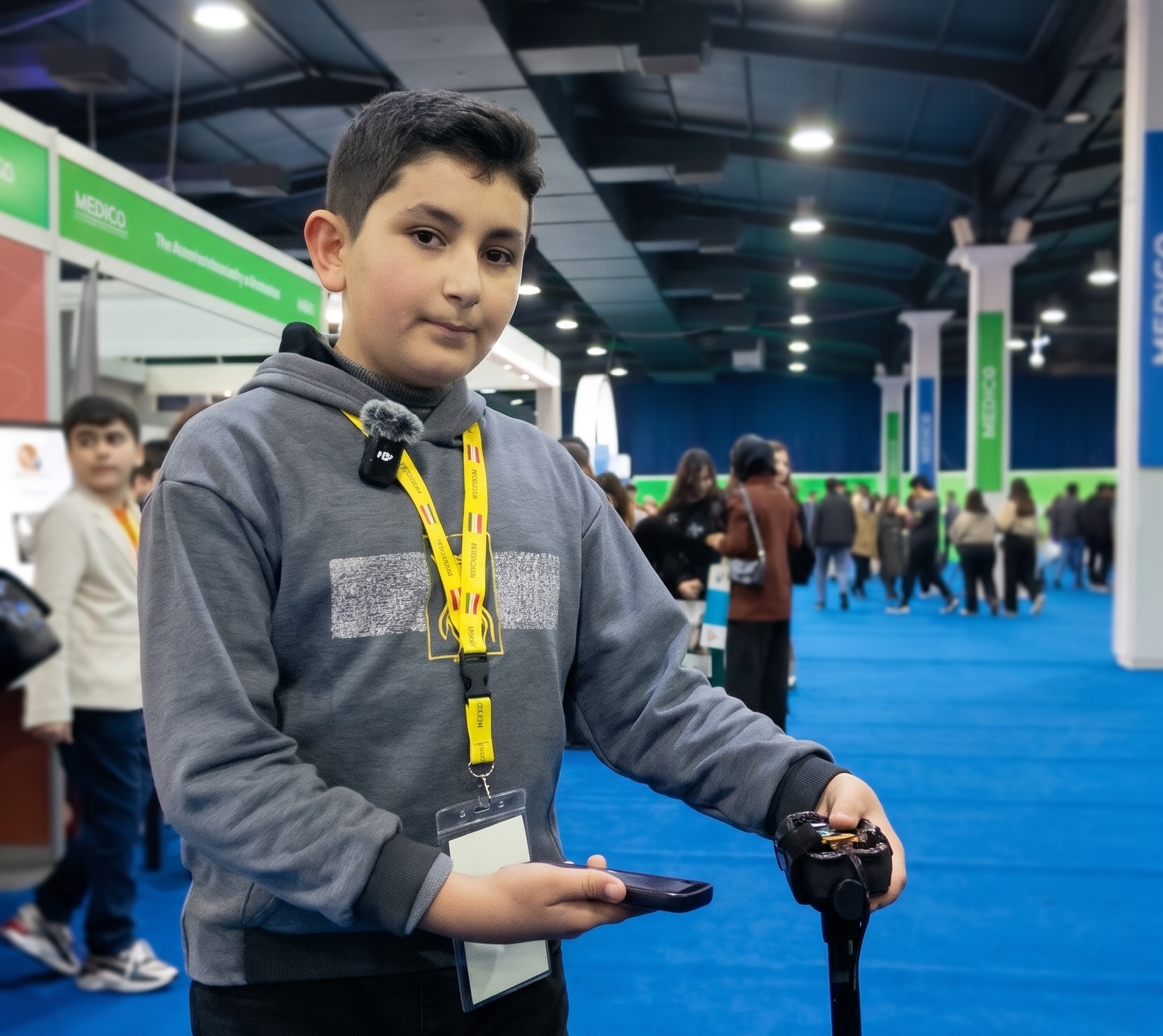
Niyaz's Blind Stick: One Robotics Course, a Million Views
In his first and only course at The Code Lab, 12-year-old Niyaz Hoshyar built a smart stick that vibrates to warn blind people of obstacles. Shown at MEDICO 2025 and live on Evin, Jin w Jyan, his video reached about a million people.
View Project →